Estate Cleanout Checklist for Meridian Families
Clearing a loved one's home is one of the hardest projects a family takes on. This checklist walks through sorting, timeline and sizing decisions at a pace that respects what the work actually is.
Construction Guide
From framing scraps to old drywall, construction debris adds up fast on any Meridian jobsite. Here's how to sort it, weigh it and keep it moving off-site without slowing the crew down.
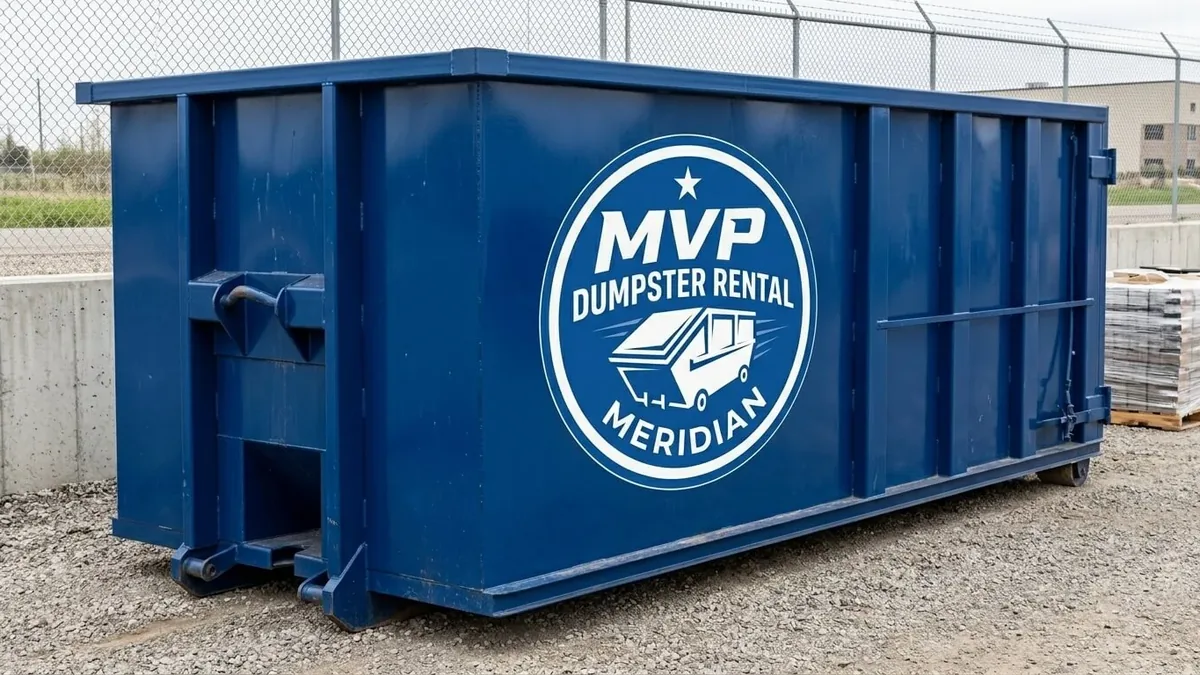
Every construction or renovation project in Meridian generates a mountain of material that has to go somewhere — and where it goes, how fast it leaves, and what it costs to haul away all depend on decisions made before the first wall comes down. Whether you're a general contractor running a full remodel or a homeowner tackling a DIY addition, understanding construction debris disposal will save you time, money and a few headaches with your hauler.
Construction and demolition (C&D) debris is a broad category, but it generally breaks down into a few familiar piles on any active jobsite:
Most of this can go into a standard roll-off dumpster together as "mixed C&D debris." The exceptions — and there are a few important ones — are covered below.
A lot of first-time renters size a dumpster by picturing how much space their debris will take up, and that's the wrong way to think about a demo or remodel job. Construction materials are dense. A dumpster that looks half-empty can already be at its weight limit, especially with drywall, tile, roofing or concrete in the mix. Every rental comes with a weight allowance built in, and going over it adds cost per ton beyond that line — so on a heavy-material job, it often makes more sense to order a larger container or plan for an extra swap rather than try to cram a heavy tear-out into an undersized box.
A rough rule of thumb: if the job involves roofing, tile, brick, concrete or plaster in any real volume, size up from what the cubic-yard capacity alone would suggest, or ask your hauler for a weight estimate before it's delivered. Our dispatchers size jobs like this daily and would rather ask a few questions up front than have a crew stuck with an overloaded box on a Friday afternoon.
Not everything that comes off a jobsite can go in a standard container. Materials that are regulated as hazardous waste need to be kept separate and disposed of through the correct channel, not mixed into general C&D debris. That generally includes:
The Mississippi Department of Environmental Quality (MDEQ) publishes household and general hazardous-waste guidance that's a useful reference point for what does and doesn't need special handling — and Mississippi falls under EPA Region 4, whose resources cover the same categories at a federal level. If a project turns up anything you're unsure about — old paint cans in a garage demo, an unmarked drum, suspect insulation — the safe move is to set it aside and ask before it goes in the dumpster, rather than assume it's fine. Our crew can point you toward the right MDEQ resource or local disposal option for anything that doesn't belong in a roll-off.
The other half of construction debris disposal isn't what goes in the container — it's how well the container schedule matches your project's pace. A few things that make swap-outs painless instead of a bottleneck:
Demo debris, framing scraps and finish-work waste all have different volumes and weights. Rather than guessing one size for an entire renovation, many contractors order a smaller container for demo (heavy, fast-filling) and a different size for the framing-and-finish phase (bulkier, lighter). It's usually cheaper and faster than one oversized box sitting mostly empty for weeks.
A container that's easy to reach gets used correctly — debris sorted, loaded flat, nothing left piling up beside it. One that's hard to reach around parked equipment or material stacks invites debris dumped wherever's convenient, which slows down the eventual pickup and can damage the driveway or surface underneath. Plan the drop spot before delivery day, not after the truck shows up.
The busiest jobsites are the ones where the dumpster gets requested for pickup the moment it's already overflowing, which means a day or more of downtime waiting on a truck. Calling a day or two ahead of "full" keeps a swap ready to roll in without stalling the crew, and it's easier for a hauler to slot a proactive swap into the route than an emergency one.
If a job shifts from framing debris to a heavy tear-out phase — tile, roofing, concrete — let your hauler know before the next swap. It affects which size makes sense and whether weight limits need adjusting, and it's a five-minute phone call that avoids a surprise overage.
Construction debris disposal isn't glamorous, but it's one of the few parts of a build where poor planning shows up immediately — as a blocked driveway, a stalled crew, or an overloaded container nobody can move. Sort as you go, keep hazardous materials separate, size for weight rather than just volume, and stay ahead of the swap-out schedule. Do that, and the dumpster becomes one less thing anyone on the crew has to think about.
FAQs
Yes, in most cases mixed C&D debris like lumber, drywall, flooring and metal scrap can go into the same container. The exceptions are hazardous materials, which need to be kept separate and disposed of through the correct channel rather than mixed in.
Sizing by volume instead of weight. Heavy materials like drywall, tile, roofing and concrete can push a container to its weight limit long before it looks full. It's worth asking your hauler for a weight estimate on any job with a lot of dense material.
No. Materials regulated as hazardous waste — paint, solvents, fuel, batteries and similar — should be kept out of general C&D debris. MDEQ publishes hazardous-waste guidance that's a good starting reference, and our crew can help point you to the right disposal option.
Set it aside and don't put it in a standard roll-off container. Suspected asbestos-containing material from an older structure needs specialized abatement handling rather than routine disposal. Ask before loading anything you're unsure about.
A day or two before the container is actually full works best. Waiting until it's overflowing to call for a swap usually means downtime waiting on a truck, while a heads-up call ahead of time lets your hauler slot the pickup into the regular route.
It depends on the project, but many contractors do better with a container sized to each phase — demo, framing, finish work — rather than one oversized box sitting around for the whole job. It's usually more cost-effective and keeps the site clearer.
Ready when you are
Call and you will speak to someone local who knows the streets, the permit rules and which box actually fits your lot. Flat rate quoted up front.
Keep reading
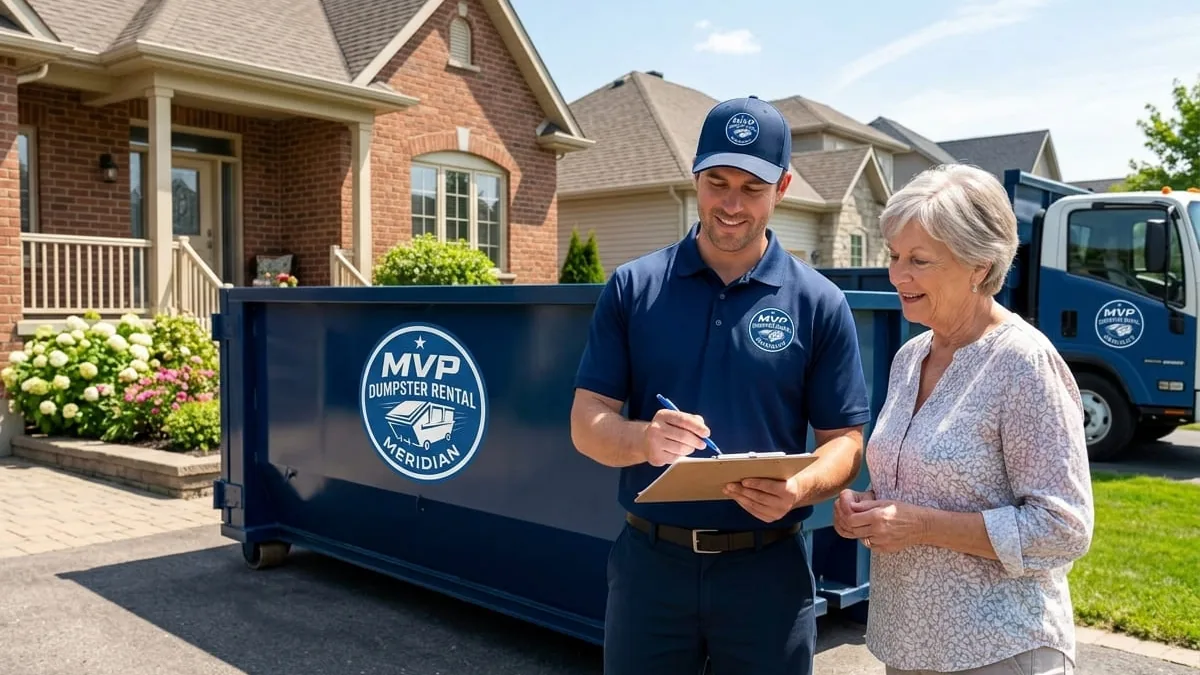
Clearing a loved one's home is one of the hardest projects a family takes on. This checklist walks through sorting, timeline and sizing decisions at a pace that respects what the work actually is.
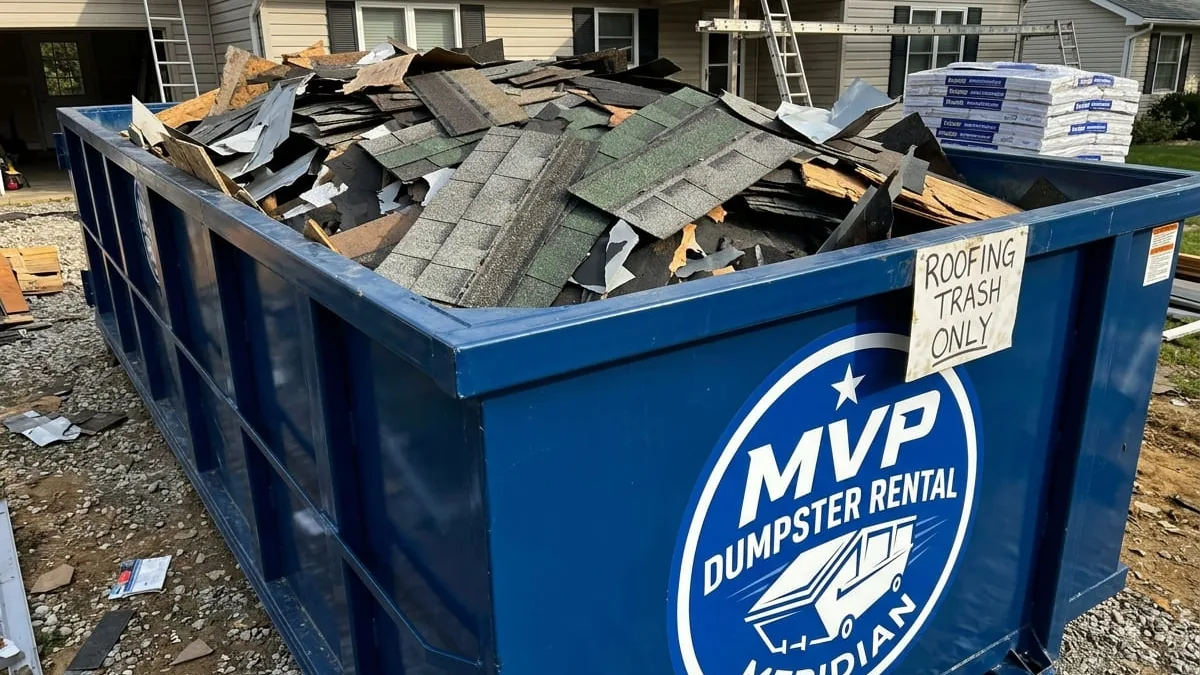
Old shingles are heavier than most homeowners expect, and sizing a dumpster wrong is the most common mistake on a re-roofing project. Here's how to get it right the first time.
Spring in Mississippi means regular thunderstorms, gusty wind and the routine cleanup that follows — downed limbs, loose shingles, fence and gutter debris. Here's how to plan for it.