Roofing Tear-Off Dumpster Guide for Meridian Homeowners and Roofers
Old shingles are heavier than most homeowners expect, and sizing a dumpster wrong is the most common mistake on a re-roofing project. Here's how to get it right the first time.
Estate Cleanout Guide
Clearing a loved one's home is one of the hardest projects a family takes on. This checklist walks through sorting, timeline and sizing decisions at a pace that respects what the work actually is.
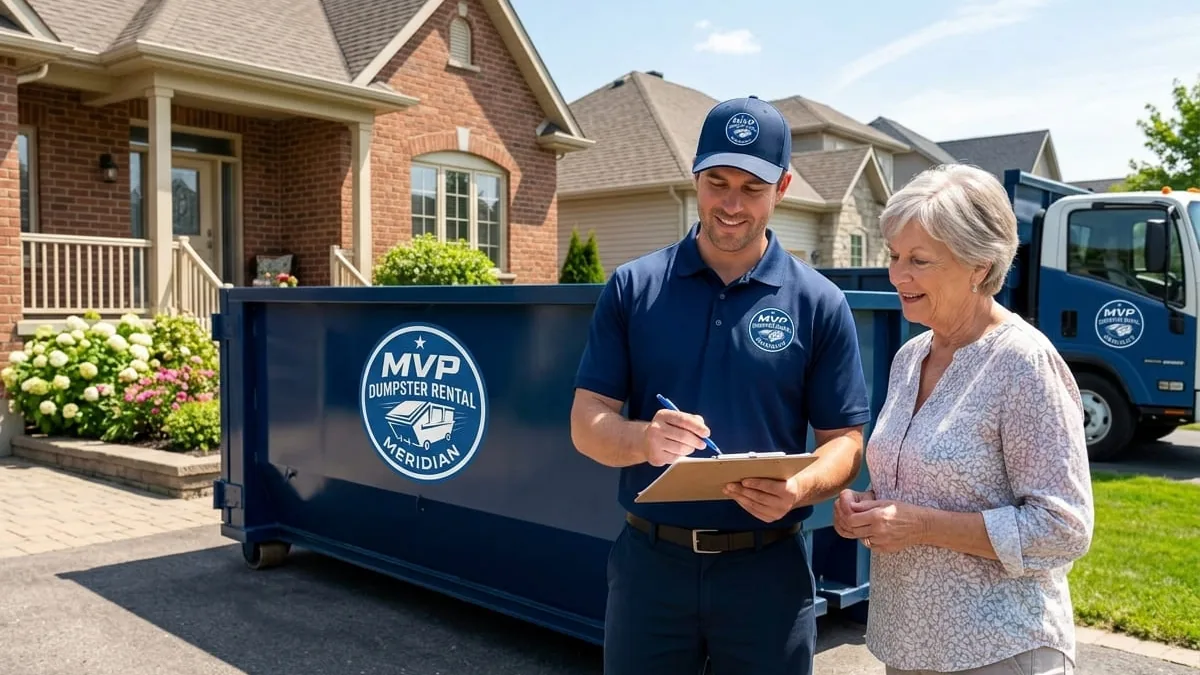
Clearing out a family home — whether after a loss, during a move to assisted living, or as part of settling an estate — is unlike any other cleanout project. It isn't just volume of belongings; it's decades of memory attached to that volume, and it deserves a pace and a process that respects both. This checklist is meant to help Meridian families move through the practical side of the work without losing sight of that.
There's often pressure — a closing date, a lease deadline, family flying back home — that makes an estate cleanout feel like it needs to happen all at once. It rarely does, and trying to rush it usually makes the emotional weight heavier, not lighter. If you can build in even a few extra days of buffer, do it. Decisions about a parent's belongings made at 9pm on a deadline night are rarely the ones people feel good about later.
Before anything is moved, sorted or thrown away, walk through the home room by room with no goal except to notice. Which rooms are straightforward (a garage full of tools, a pantry) and which will take longer (a home office with papers, a closet with clothing)? This walkthrough is also the right time to flag anything that needs a specialist eye before cleanout starts — a piano, artwork, firearms, or anything with potential appraisal value.
Most people default to "keep" and "throw away," which forces too many hard calls too early. A four-category sort works better:
Having a fourth "undecided" pile is also completely normal. Some items just need more time, and that's fine — set them aside in one clearly marked area rather than forcing a decision under pressure.
Before any large-scale sorting begins, do a dedicated pass for paperwork, jewelry, cash, keys and small valuables that could be easy to lose track of once larger cleanout work is underway. Important documents (deeds, wills, financial records, insurance papers) should be pulled and set aside for whoever is handling the estate's legal and financial matters. This step matters most in a home that's about to see a lot of activity and multiple helpers moving through it.
It's tempting to try to sort "all the clothes" across the whole house at once, but working room by room tends to hold up better emotionally and logistically. Finishing a room gives a visible sense of progress, and it's easier to coordinate with other family members when everyone knows which room is "done" and which is still in progress.
Sorting through a parent's or grandparent's belongings is emotional work, and it's completely reasonable to ask other family members, a trusted friend, or a professional estate-cleanout service to help with the physical labor so the family can focus on the decisions that actually need a family member's judgment. There's no obligation to do every box alone.
Once the donate and dispose piles start taking shape, it's time to think about disposal logistics. Estate cleanouts tend to run larger than people expect — a full house, even a modest one, generates more disposal volume than a typical room renovation. A few sizing notes:
Our team is used to sizing these jobs for exactly this kind of situation, and a quick phone conversation about what's in the home and how many rooms are involved is usually enough to land on the right size the first time.
If the home is going on the market, being respectful of the driveway, lawn and curb appeal matters. Talk with your hauler about placement that keeps the container out of the way of showings or open houses if the timeline overlaps, and ask about protective boards for the driveway if the home will be relisted soon after cleanout.
There's no version of this checklist that makes an estate cleanout easy. What it can do is make the practical decisions — sorting, timeline, sizing — a little more manageable, so the family has more room for the parts of this process that actually need their attention. Take breaks. Let some decisions wait a day. The dumpster will still be there when you're ready for it.
FAQs
It varies widely depending on the size of the home and how much sorting is needed, but most family-led cleanouts take anywhere from a few days to a few weeks spread across multiple visits. Building in extra time rather than rushing tends to make the process easier on everyone.
Most single-family home cleanouts call for a mid-size to larger roll-off container, since furniture and household volume add up quickly even when the weight is manageable. A quick call describing the home's size and contents helps us recommend the right fit.
Furniture and mattresses generally can. Appliances that held refrigerant, like refrigerators or window air conditioners, need proper handling before disposal — ask your hauler how to handle those specifically.
Set them aside in a clearly marked area rather than forcing a decision under time pressure. It's completely normal for some items to need more time, and revisiting them later, even weeks later, is a reasonable approach.
Yes. If a cleanout is happening in stages — one weekend at a time, or as family members are able to visit — we can schedule pickups and swaps around that timeline rather than requiring everything in one pass.
It's best to do a dedicated pass for paperwork, jewelry, cash and small valuables before general sorting begins, and set those items aside for whoever is handling the estate's legal and financial matters.
Ready when you are
Call and you will speak to someone local who knows the streets, the permit rules and which box actually fits your lot. Flat rate quoted up front.
Keep reading
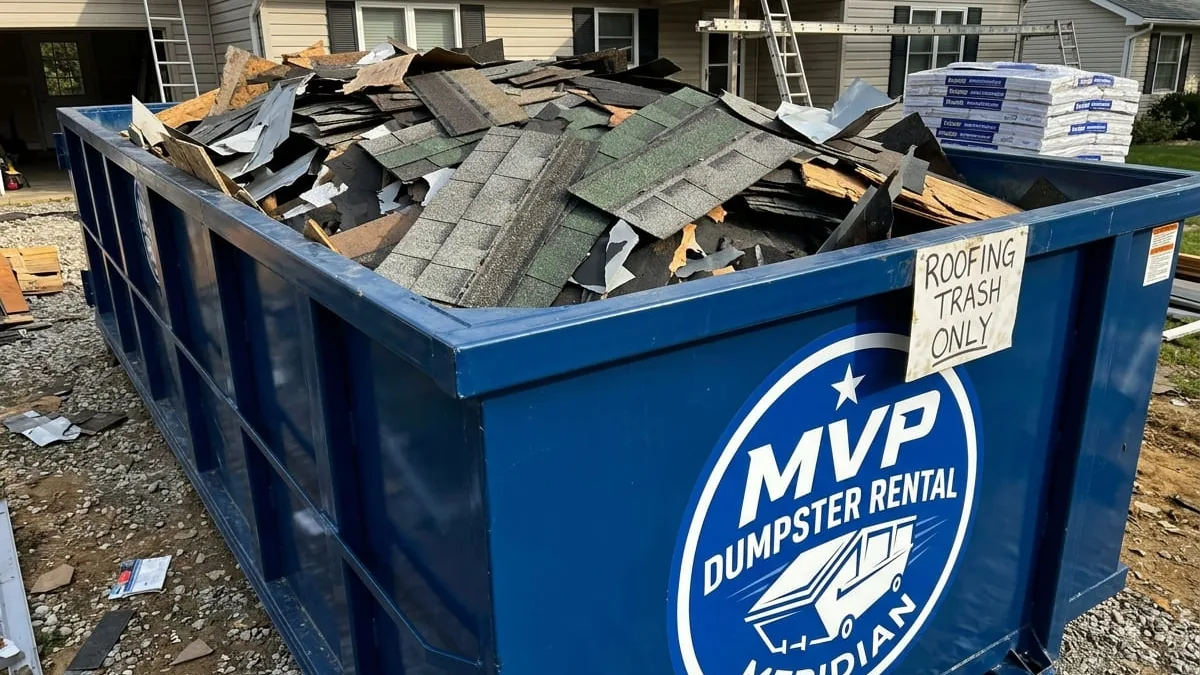
Old shingles are heavier than most homeowners expect, and sizing a dumpster wrong is the most common mistake on a re-roofing project. Here's how to get it right the first time.
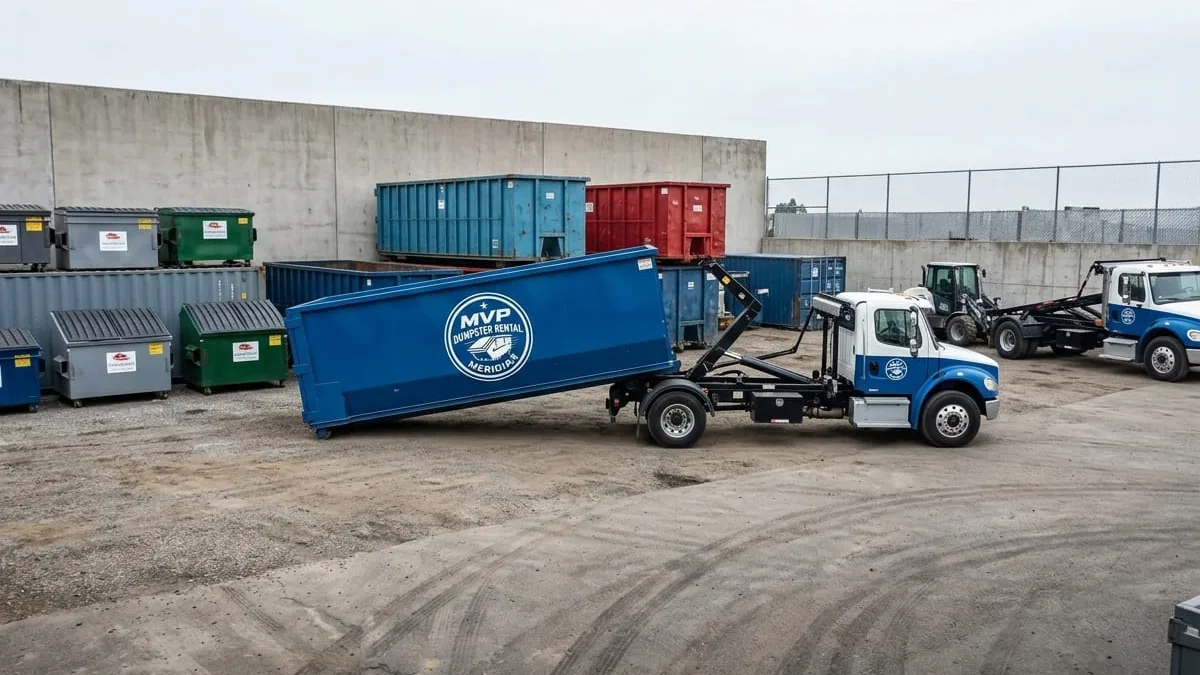
Spring in Mississippi means regular thunderstorms, gusty wind and the routine cleanup that follows — downed limbs, loose shingles, fence and gutter debris. Here's how to plan for it.

Where a dumpster sits matters as much as what size it is. Here's how driveway protection works, which spots to avoid, and why placement decisions save you from repair bills later.