Spring Storm Season Cleanup: A Dumpster Guide for Mississippi
Spring in Mississippi means regular thunderstorms, gusty wind and the routine cleanup that follows — downed limbs, loose shingles, fence and gutter debris. Here's how to plan for it.
Roofing Guide
Old shingles are heavier than most homeowners expect, and sizing a dumpster wrong is the most common mistake on a re-roofing project. Here's how to get it right the first time.
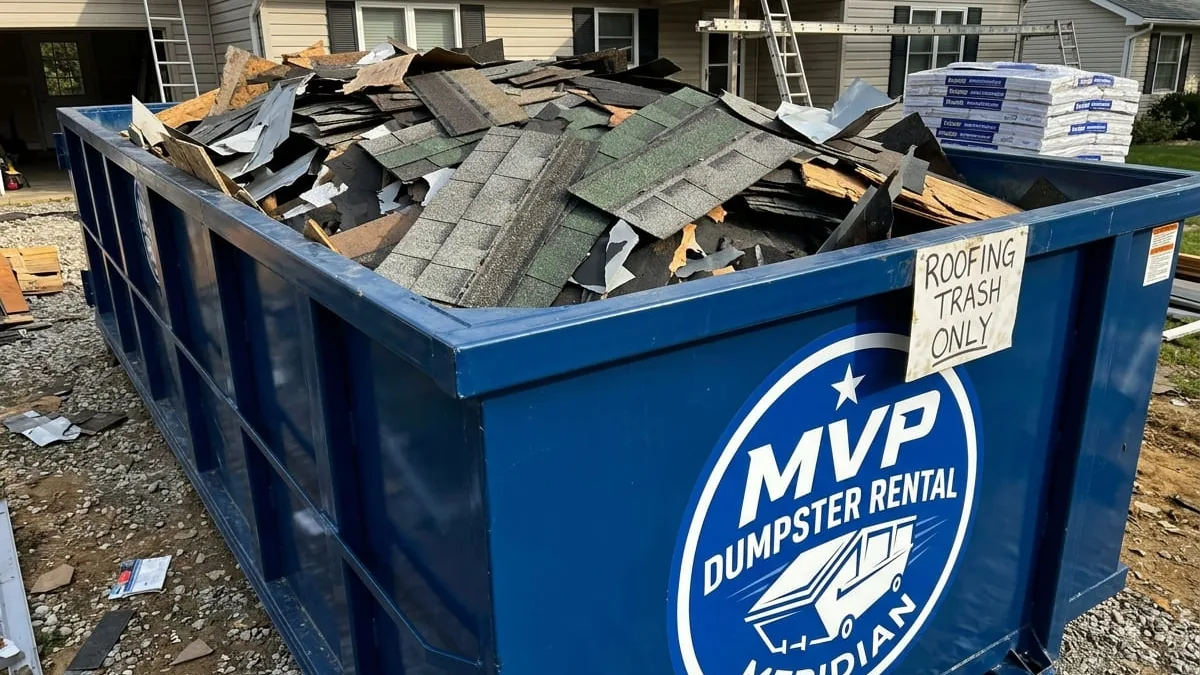
Whether a roof is coming off because it's simply reached the end of its service life, is being upgraded ahead of a sale, or needs a few sections replaced after ordinary wind or hail knocked loose some shingles, the dumpster planning is the same conversation every time: how many squares, how many layers, and how heavy is this going to be. Get those three questions answered before the crew starts tearing, and the disposal side of a re-roofing project runs itself.
Roofers measure roofs in "squares" — one square equals 100 square feet of roof surface. It's the number your roofing contractor will already have calculated for material ordering, and it's the same number that determines dumpster size for tear-off debris. As a rough guide:
These are starting points, not guarantees — the real number depends heavily on the next factor.
A huge swing factor in sizing is how many layers of roofing are actually coming off. Some homes have a single layer of shingles; others, especially older homes that were re-roofed over existing shingles rather than torn down to the deck, can have two or even three layers stacked up. Each additional layer roughly adds to both the volume and — more importantly — the weight of the tear-off debris. Always ask your roofing contractor how many layers are on the roof before finalizing dumpster size. A one-layer tear-off and a three-layer tear-off on the exact same square footage can need two completely different container sizes.
This is the single most common surprise on a roofing job: asphalt shingles are dense. A dumpster loaded with tear-off debris can hit its weight limit while still looking like there's plenty of room left, especially if it also includes old underlayment, flashing, and any decking that needed replacing. Because of that, roofing tear-off containers are almost always sized (and priced) around weight allowance more than visual capacity. If a roof has multiple layers or a large square footage, it's worth asking your hauler for a weight estimate up front rather than guessing based on how big the container looks.
A tear-off dumpster generally handles:
A couple of items are worth flagging separately: metal roofing panels can often be recycled rather than landfilled, and it's worth asking if that's an option before tear-off begins. Any old insulation or materials from an older roof structure that seem unusual — not standard shingle, felt or decking — should be pointed out before they're loaded, just so nothing unexpected ends up mixed into a standard load.
Timing is where a lot of roofing jobs lose efficiency. A few scheduling notes that keep the tear-off and disposal moving together:
Most roofing crews want the container on-site and positioned before work starts, not arriving mid-morning while tear-off is already underway. Scheduling delivery the afternoon or evening before gives the crew a clear start the next day.
Roofing debris usually comes off the roof and straight down — off a chute, tossed directly, or wheelbarrowed a short distance. Positioning the dumpster as close to the work area as safely possible (without sitting under power lines or on soft ground) saves the crew real time over the course of a full tear-off day.
On a bigger roof, a single container might fill before the whole tear-off is even finished. If that's a realistic possibility given the square footage and layer count, it's worth arranging a same-day or next-morning swap in advance rather than having a full container sitting mid-job.
Roofing work depends on the weather, and a tear-off scheduled around a stretch of rain, wind or heat is normal — roofing crews plan around this constantly. If a job gets pushed a day or two because of routine weather, just let your hauler know so the dumpster delivery or pickup can shift with it rather than sitting idle or arriving too early.
Not every roofing dumpster is for a full re-roof. Ordinary wind or a hailstorm can knock loose a handful of shingles or damage a small section without requiring a full tear-off — in those cases, a much smaller container (or sometimes just bagged debris) may be all that's needed. If you're not sure whether your repair calls for a dumpster at all, a quick call to describe the scope of the work is the fastest way to find out.
Roofing tear-off disposal comes down to three numbers: squares, layers, and weight. Nail those down with your roofing contractor before the dumpster gets ordered, plan delivery and pickup around the crew's schedule rather than a generic timeline, and the disposal side of the job will keep pace with the roof itself.
FAQs
Start with how many roofing squares are on the home and how many layers of shingles are coming off — your roofing contractor will already have both numbers. A single-layer tear-off on a smaller home typically needs a smaller container; multiple layers or a larger roof usually need a mid-size or larger one.
Asphalt shingles are much denser than most household debris. A container can hit its weight allowance while there's still visible space left, especially with multiple layers or with old decking mixed in, so roofing loads are sized around weight more than visual capacity.
In most cases, yes — damaged decking or sheathing pulled during tear-off can generally go in with the shingles and underlayment. If anything looks unusual or you're unsure, it's best to point it out before it's loaded.
Yes, and it's worth arranging in advance for bigger tear-offs. If a roof's square footage or layer count makes it likely the container will fill before the job is done, we can plan a same-day or next-morning swap so the crew isn't waiting.
A small repair — a handful of shingles knocked loose by ordinary wind, for example — often doesn't need a full-size dumpster at all. Give us a quick call to describe the scope and we can recommend the right option, which might be a smaller container or none at all.
Often, yes. Metal roofing panels can frequently be recycled rather than landfilled, so it's worth asking before tear-off begins whether that's a good option for your project.
Ready when you are
Call and you will speak to someone local who knows the streets, the permit rules and which box actually fits your lot. Flat rate quoted up front.
Keep reading
Spring in Mississippi means regular thunderstorms, gusty wind and the routine cleanup that follows — downed limbs, loose shingles, fence and gutter debris. Here's how to plan for it.

Where a dumpster sits matters as much as what size it is. Here's how driveway protection works, which spots to avoid, and why placement decisions save you from repair bills later.
Not everything coming out of a cleanout or remodel has to go to the landfill. Here's what's worth diverting for recycling in Mississippi, and what should just go in the dumpster.