What to Recycle vs. What Goes in the Dumpster in Mississippi
Not everything coming out of a cleanout or remodel has to go to the landfill. Here's what's worth diverting for recycling in Mississippi, and what should just go in the dumpster.
Placement Guide
Where a dumpster sits matters as much as what size it is. Here's how driveway protection works, which spots to avoid, and why placement decisions save you from repair bills later.
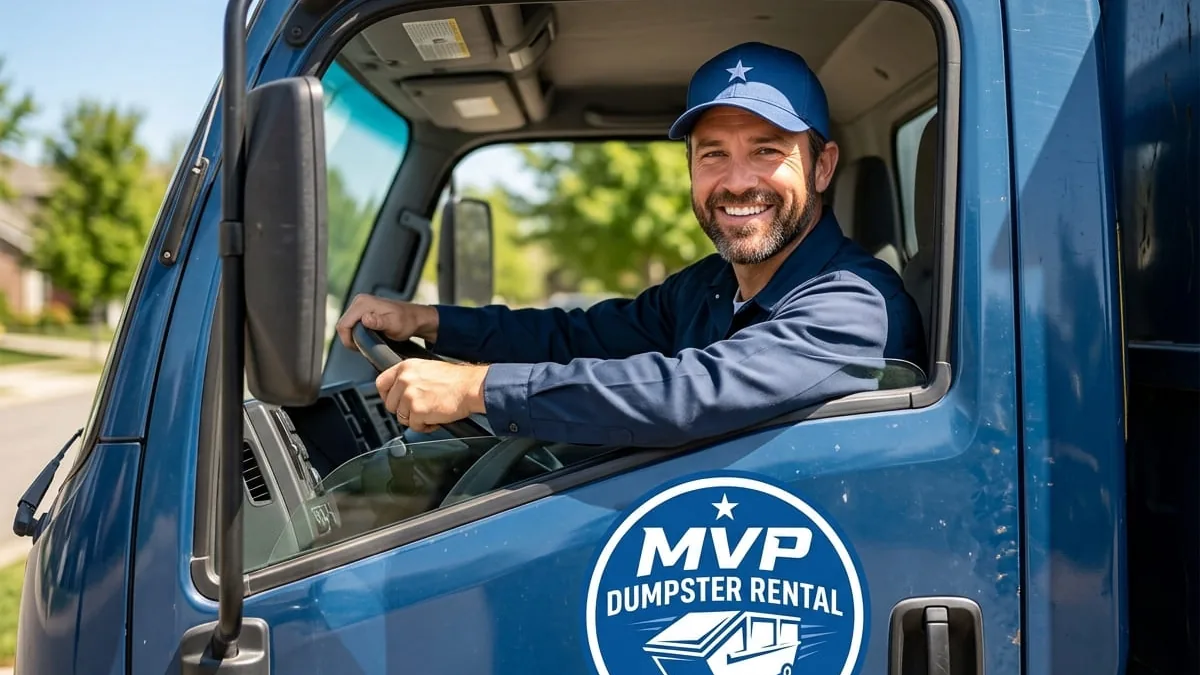
Most of the planning that goes into a dumpster rental focuses on size and timing, but placement deserves just as much attention. A roll-off container is heavy even before it's loaded, and where it sits for the length of the rental can affect your driveway, your yard, and even utilities you can't see from the surface. A few minutes of planning before delivery day avoids most of the problems people run into.
A loaded roll-off dumpster is a substantial weight resting on a fairly small footprint, and the delivery and pickup process adds a sliding, dragging motion as the container is winched on and off the truck. On a concrete or asphalt driveway, that combination — sustained point weight plus a sliding load — can cause cracking, surface gouging or staining if the container sits directly on the surface, especially in warmer weather when asphalt is softer.
Driveway protection boards solve this by spreading the load across a wider area and creating a barrier between the container's rails and the driveway surface itself. Instead of concentrated weight on a few contact points, the boards distribute it evenly, and they also stop the container from sliding directly against the pavement during placement and pickup. If your driveway is a priority — a newer surface, a decorative or stamped finish, or simply one you'd rather not risk — ask about protection boards when you schedule delivery. It's a simple step that avoids what would otherwise be an entirely avoidable repair cost.
Some spots that look convenient at first glance are actually poor choices for a roll-off container. Steer clear of:
The most straightforward spot for most residential deliveries is a driveway with protection boards underneath, positioned close enough to the work area to be convenient without blocking garage access you'll need during the project. For projects where the driveway isn't available or preferred, a level section of yard can work, provided the ground is firm and the route in for the delivery truck is clear. Street placement is sometimes an option too, though it typically requires checking with your hauler about any local right-of-way rules first — more on that below.
Mississippi's clay-heavy soils in this part of the state can hold moisture and soften more than sandier soils after a stretch of wet weather, which is worth factoring into placement choices — especially for yard placements rather than a paved driveway. A spot that looks firm on a dry week can soften considerably after several days of rain. If you're planning a delivery during a wetter stretch of the year, leaning toward a paved surface with protection boards, rather than a grass or dirt spot, is generally the safer call.
If you're considering placing a container in the street or partially in the public right-of-way rather than entirely on your own property, check with the City of Meridian first. Right-of-way placement in the city is governed under Chapter 20 of the Meridian Code of Ordinances, and requirements can change, so it's worth a quick call to confirm current rules before assuming street placement is allowed without a permit. We're happy to help point you toward the right city contact if you're not sure where to start.
Placement is one of the easiest parts of a dumpster rental to get right — and one of the most expensive to get wrong after the fact. A short conversation with your hauler about your property, your driveway surface, and what's underground in the spot you're considering is usually all it takes. If you're ever unsure, describe your property over the phone before delivery day and we'll help you land on a placement that works for both the project and the property.
FAQs
If you care about the condition of your driveway surface, yes. A loaded roll-off container puts significant point weight on a small area, and the sliding motion during delivery and pickup can crack or gouge concrete or asphalt without a protective barrier underneath.
Yes, as long as the ground is firm and level and there's a clear path for the delivery truck. Soft or uneven ground, especially after rain, can let the container sink unevenly, so a paved surface is generally the safer choice during wetter stretches of the year.
It isn't — avoid placing a container directly over a septic tank or drain field, since the weight can damage buried components or compact the soil above the field. If you're unsure where your septic system runs, check before choosing a placement spot.
Sometimes, but it typically requires checking local right-of-way rules first. In the City of Meridian, street or right-of-way placement falls under Chapter 20 of the Meridian Code of Ordinances, so it's worth confirming current requirements before assuming it's allowed without a permit.
The container can settle unevenly, which makes it harder and less safe to load, and can complicate pickup when the truck needs to winch it back on. If a spot seems questionable, especially after rain, a paved surface with protection boards is the better option.
Enough to maneuver in, position the container, and back out safely, plus vertical clearance if there are any overhead lines near the drop spot. It's worth walking the site and mentioning any tight spots or obstacles when you schedule delivery.
Ready when you are
Call and you will speak to someone local who knows the streets, the permit rules and which box actually fits your lot. Flat rate quoted up front.
Keep reading
Not everything coming out of a cleanout or remodel has to go to the landfill. Here's what's worth diverting for recycling in Mississippi, and what should just go in the dumpster.
A new build generates different debris at every phase, from framing offcuts to drywall dust to finish-work packaging. Here's how to plan dumpster service across the whole timeline instead of guessing once.
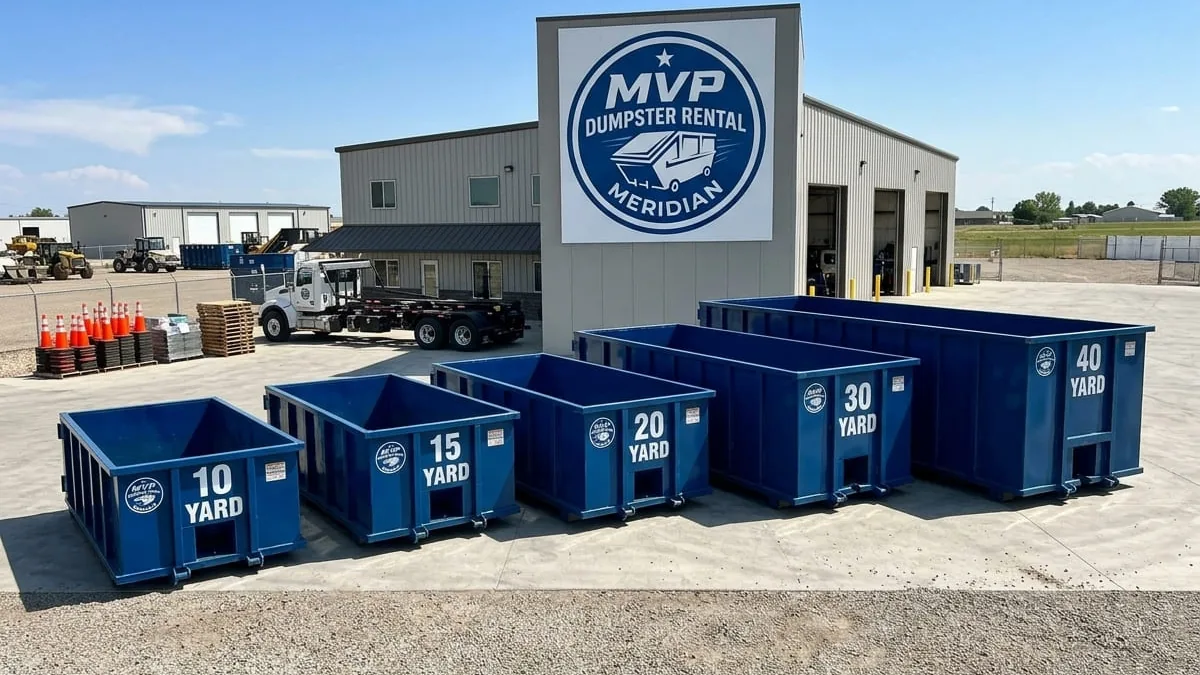
Ten, fifteen, twenty, thirty or forty yards — here is how to match the container to the job so you are not paying for space you never fill, or calling us back for a second one.