What Actually Drives Dumpster Rental Cost in Meridian, MS
There's no single price for a dumpster rental — here's an honest breakdown of the handful of things that actually move the number, so you know what you're paying for before you call.
Sizing Guide
Ten, fifteen, twenty, thirty or forty yards — here is how to match the container to the job so you are not paying for space you never fill, or calling us back for a second one.
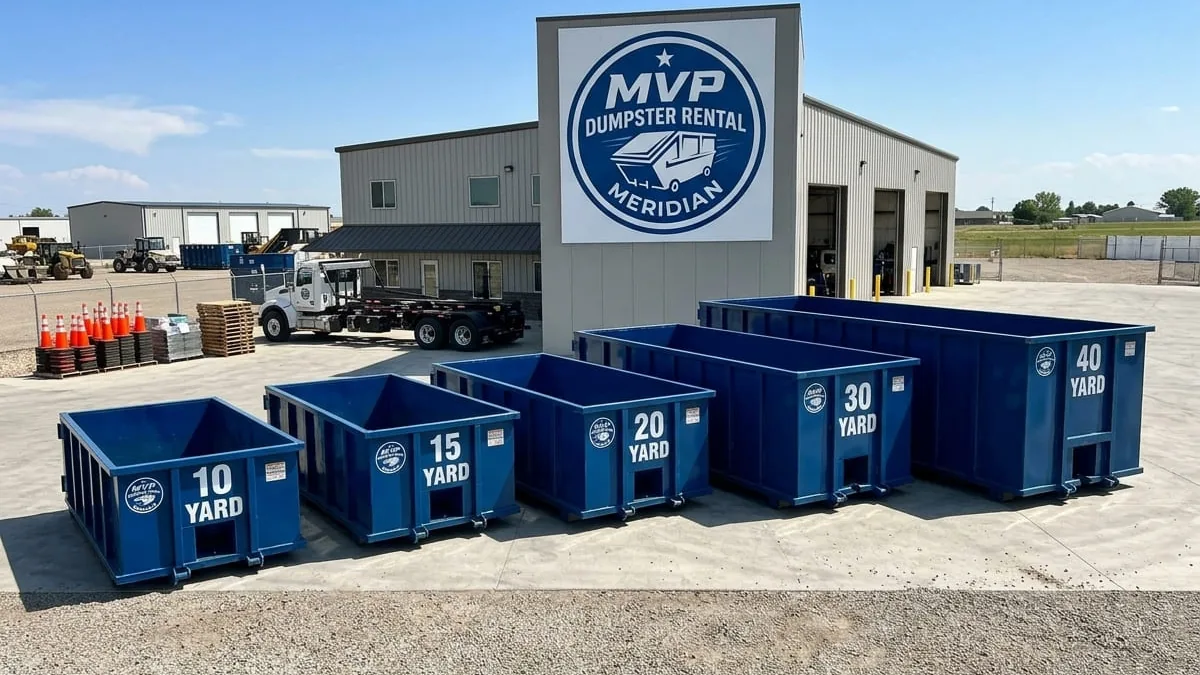
The single most common question we get from Meridian homeowners and contractors is not "how much does this cost," it's "what size do I actually need." Guess too small and you either overfill it or end up paying for a second haul. Guess too big and you're paying for space you never use. This guide walks through the five sizes we run — 10, 15, 20, 30 and 40 yard — and ties each one to the kind of project it actually fits, so you can size it once and get it right.
A "yard" in this context means a cubic yard — three feet by three feet by three feet of space. So a 10 yard dumpster holds roughly 10 cubic yards of debris, a 20 yard holds about 20, and so on. What throws people off is that the box doesn't look like it holds "that much" when you're standing next to it, because these containers are built low and wide rather than tall, both for stability on a driveway and so you can actually toss debris over the side without a ladder. Weight matters just as much as volume — a 20 yard box full of loose insulation and drywall scraps weighs nothing like a 20 yard box full of roofing shingles or concrete. We size projects on both dimensions, not just cubic yards, which is part of why a quick phone call before you book beats guessing off a chart alone.
The 10 yard is our smallest container and the right call for jobs where the debris pile, if you actually stacked it up, wouldn't fill more than a small bedroom. Typical uses:
Because it's compact, the 10 yard is also the easiest to fit into a tight driveway in older Meridian neighborhoods where lots run narrow. If your project is "clean out this one space" rather than "renovate this whole house," start here.
The 15 yard splits the difference between a small cleanout and a full renovation job. It's a popular pick for:
If you're staring at a 10 yard estimate and thinking "that might be cutting it close," the 15 yard is usually the safer step up rather than jumping straight to a 20.
The 20 yard is the workhorse of residential dumpster rental in Meridian, and it's the size we deliver most often. It handles:
A quick note on roofing: shingles are heavy. A 20 yard box fills up fast on weight before it fills up on visible space, so a full tear-off on a larger or multi-layer roof can sometimes call for a 30 yard instead, or two separate hauls. Tell us the roof's square footage and how many layers are coming off and we'll size it correctly the first time.
Once a project moves from "cleanout" into "renovation" or "tear-down," the 30 yard usually becomes the right call:
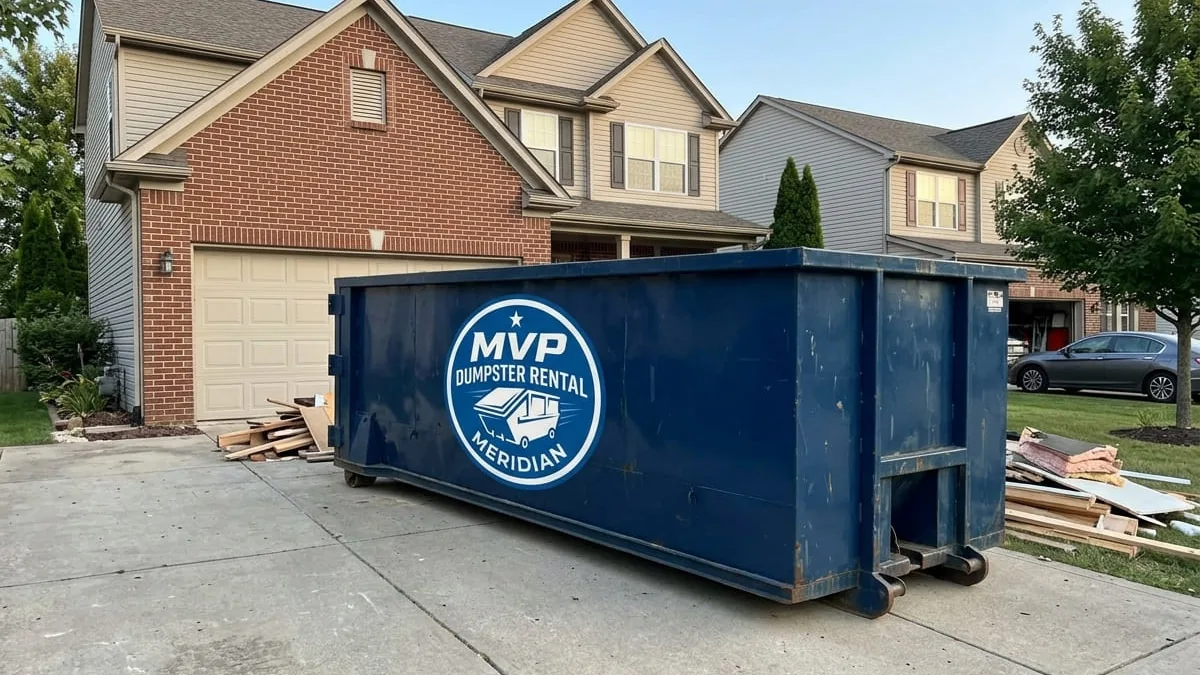
This is a big container — figure roughly the length of a mid-size pickup truck and about chest-high on the sides — so it needs real driveway or curb space and a clear overhead path for delivery. We'll walk that through with you when you book.
The 40 yard is our largest container and it's built for high-volume, lower-density debris rather than heavy demolition material. Good fits include:
Because 40 yards is so much volume, weight limits become the deciding factor even more than with a 30 yard. If your project is mostly concrete, dirt, or shingles, a 40 yard is often the wrong tool — the box will "weigh out" long before it fills up, and you'll pay more than you needed to. For dense, heavy material, a smaller box (or a dedicated heavy-debris box) run through more than once is usually the smarter and more economical route.
| Project type | Usual size |
|---|---|
| Single room or garage cleanout | 10 yard |
| Multi-room cleanout, small deck/fence removal | 15 yard |
| Whole-home cleanout, single-layer roof, kitchen/bath remodel | 20 yard |
| Whole-house renovation, larger roof, small demo | 30 yard |
| New construction, large cleanout, land clearing | 40 yard |
Every project is a little different, and the fastest way to avoid an oversized bill or an undersized box is to describe the job to our dispatcher over the phone. Tell us the type of debris, roughly how much of it there is, and whether it's heavy material (roofing, concrete, dirt) or light and bulky (furniture, boxes, brush). We'll size it and get you a flat quote so there are no surprises when the truck rolls up.
FAQs
The 20 yard is our most-requested size. It's large enough for a whole-home cleanout, a kitchen or bathroom remodel, or a typical single-story roof tear-off, without being oversized for a residential driveway.
Sometimes, especially for heavy material like concrete or shingles where a bigger box would hit its weight limit before it fills up anyway. For bulky, lighter debris, it's usually more efficient to size up once rather than pay for two separate hauls and swap fees.
It comes down to square footage and how many layers of shingles are coming off. A single-layer tear-off on an average roof usually fits a 20 yard. A larger roof or a multi-layer tear-off often needs a 30 yard, or two hauls with a smaller box. Tell our dispatcher the roof size and layer count and we'll size it correctly.
In most cases, yes. We ask about driveway length, width and any overhead obstructions (trees, power lines, low carports) before delivery so the driver can place the box safely without damaging your driveway or landscaping.
Call us. We can often swap a full container for an empty one or schedule an early pickup and a second delivery, though it's more efficient — and usually cheaper overall — to size up front instead of relying on a mid-project swap.
Generally yes, since larger boxes cost more to haul and dispose of, but the bigger driver of overall cost is usually weight and what's inside the box rather than size alone. We'll walk through the real cost drivers with you when you call for a quote.
Ready when you are
Call and you will speak to someone local who knows the streets, the permit rules and which box actually fits your lot. Flat rate quoted up front.
Keep reading
There's no single price for a dumpster rental — here's an honest breakdown of the handful of things that actually move the number, so you know what you're paying for before you call.
Most household and construction debris is fine to toss in — but a short list of items needs a different disposal path. Here's what's allowed, what's not, and why.
Driveway placement almost never needs a permit — the street or right-of-way usually does. Here's how to tell which situation you're in before you book.