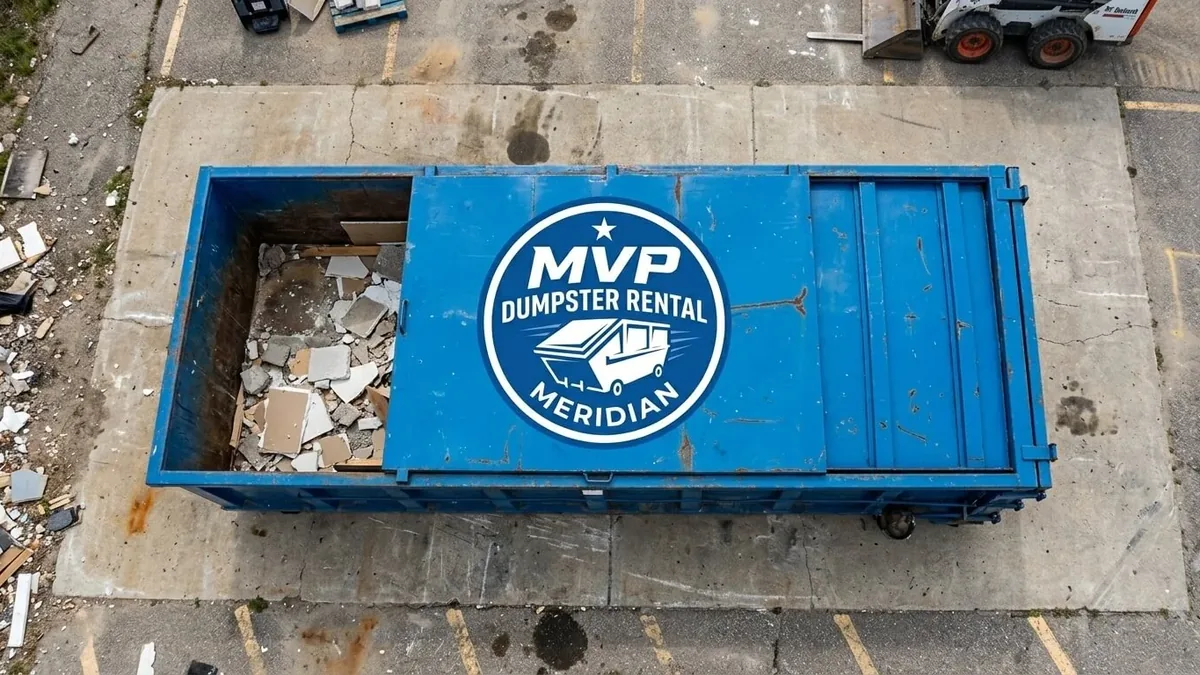
A roll-off dumpster is built to handle general debris efficiently, and for most projects, loading everything into one container is the simplest, fastest way to get a cleanup or remodel done. But a meaningful share of what comes out of a typical project — concrete, scrap metal, clean cardboard, yard waste — can be diverted to recycling instead of landfill disposal, often at lower cost and sometimes for free. Here's a practical look at what's worth separating out, and what should just go straight in the dumpster.
Why bother separating anything out
Diverting recyclable material isn't just an environmental nicety — it can genuinely reduce what you're paying for disposal, since dense material like concrete and metal is often priced differently (and sometimes accepted for free or a lower fee) at dedicated recycling facilities compared to general debris disposal. It also means your dumpster fills up more slowly with material that actually needs landfill disposal, which can matter if you're working with weight limits on a heavy job. For a lot of Meridian homeowners and contractors, a quick sort at the curb pays for itself.
Concrete, brick and masonry
Concrete, brick, block and other masonry debris is dense and heavy, which makes it one of the most worthwhile categories to divert if you have any meaningful quantity. Clean concrete (without a lot of rebar, wire mesh or attached material) is commonly accepted at dedicated concrete recycling operations, where it gets crushed and reused as aggregate rather than taking up landfill space. If your project is generating a driveway's worth of old concrete or a demoed patio, it's worth asking around locally about a concrete recycling drop-off before defaulting to loading it all into the dumpster — though for smaller quantities mixed in with other demo debris, the dumpster is still the simpler and more practical route.
Scrap metal
Metal — old appliance shells (once refrigerant is properly handled), pipe, wiring, structural scrap, aluminum, steel framing offcuts — has real scrap value and is widely accepted at metal recyclers throughout the region. Setting aside a separate pile for scrap metal during a demolition or cleanout project is one of the easiest wins here, since metal recyclers often pay for larger quantities rather than charging a disposal fee.
Cardboard and paper
A big remodel or a move generates a surprising amount of clean cardboard — packaging from new appliances, fixtures, cabinetry and materials. Flattened and kept dry, clean cardboard is one of the most straightforward materials to recycle through standard municipal or curbside recycling programs. For a small amount, it's not worth the extra sorting effort and can just go in the dumpster; for a large renovation generating pallet-loads of packaging, setting it aside for recycling is worth the effort.
Yard waste and mulching
Branches, leaves, grass clippings and general yard debris are often better handled through mulching or composting than landfill disposal, and many communities and private yard-waste operations in the region accept this kind of material separately. If your project is primarily a landscaping cleanup — tree trimming, brush clearing, storm-related yard debris — it's worth checking whether a local yard-waste or mulching service is a better fit than a general debris dumpster, especially for large quantities. For smaller or mixed yard cleanups that include some non-yard debris, the dumpster remains the more practical single option.
What generally should NOT be diverted and just belongs in the dumpster
- Mixed construction and demolition debris where separating materials isn't practical
- Drywall, insulation and similar building materials without dedicated local recycling options
- General household junk, broken furniture and non-recyclable household items
- Roofing shingles (some regions have shingle recycling programs, but check local availability before assuming)
- Contaminated or heavily mixed material of any kind — once cardboard, metal or concrete gets soaked, dirty, or mixed with non-recyclable material, it usually isn't worth the extra sorting effort
Hazardous items are a separate category — not "recycling," not general dumpster
It's worth repeating: hazardous materials like paint, chemicals, batteries and appliances with refrigerant are not a "recycle vs. dumpster" choice — they need a dedicated hazardous waste or specialty disposal path regardless. Mississippi Department of Environmental Quality (MDEQ) publishes household hazardous waste guidance and runs an electronic waste recycling program specifically for these categories. See our full guide on what can and can't go in a dumpster for the complete rundown, and check MDEQ's resources directly for the most current guidance on hazardous materials and electronics in Mississippi.
A practical approach for most projects
You don't need to sort every material perfectly to get the benefit of diverting the big ones. A reasonable approach for most Meridian projects:
- Set aside a separate pile for scrap metal if your project generates any meaningful quantity
- Keep concrete and masonry debris separate if you have a driveway's or patio's worth
- Flatten and set aside clean cardboard if it's piling up from new materials or appliances
- Everything else — mixed debris, general junk, drywall, flooring, most construction scrap — goes straight in the dumpster, which is exactly what it's built for
If you're not sure whether a specific material is worth diverting for your project's scale, ask us when you book. We deal with this material mix every day and can tell you quickly whether separating something out is worth the effort for your situation.